
ELECTRICAL
Last updated: April 2026
Disclosure: Plumbing and Electrical Help is a participant in the Amazon Associates Program, an affiliate advertising program designed to provide a means for sites to earn advertising fees by linking to Amazon.
You’re in the middle of a movie, cooking dinner, or just relaxing — and suddenly everything goes dark. You check the breaker panel and see one switch has flipped to the “off” position.
It happens to everyone. But when it keeps happening, it’s trying to tell you something. A tripping breaker is a safety feature — it’s protecting your home from electrical overloads that could cause fires.
Let’s figure out what’s causing yours to trip.
What Does a Circuit Breaker Do?
Think of a circuit breaker as a safety valve for electricity. It’s designed to:
- Prevent overloads — when too much current flows through wires
- Protect against short circuits — when a hot wire touches a neutral or ground wire
- Guard against ground faults — when electricity takes an unintended path to ground
When any of these happen, the breaker “trips” (flips off) to cut off the electricity before the wires overheat and cause a fire.
Common Reasons Breakers Trip
1. Overloaded Circuit
Too many devices drawing power from one circuit. Example: running the microwave, toaster, and coffee maker on the same kitchen circuit.
2. Short Circuit
A hot wire touching a neutral or ground wire. This creates a sudden surge of current that trips the breaker instantly. Often caused by damaged cords or faulty outlets.
3. Ground Fault
Electricity flows through a person or an unintended path to ground. Common in wet areas like bathrooms and kitchens — this is why GFCI outlets exist.
4. Old or Faulty Breaker
Breakers wear out over time. An older breaker may trip more easily or even fail entirely.
5. Too Many High-Wattage Appliances
Large appliances like air conditioners, dryers, and space heaters draw significant power. Two on the same circuit = overload.
How to Diagnose the Problem
Step 1: Identify when it happens
Does the breaker trip only when you use a specific appliance? Only at certain times? This helps pinpoint the cause.
Step 2: Unplug everything on that circuit
Remove all devices and see if the breaker stays on. If it does, the problem is a device or overload.
Step 3: Plug devices back in one at a time
Reconnect devices one by one to find the culprit.
Step 4: Check for damaged cords or outlets
Look for frayed wires, burn marks, or sparking. If you find any, stop using that outlet immediately.
Check Current Price on Amazon – Multimeter
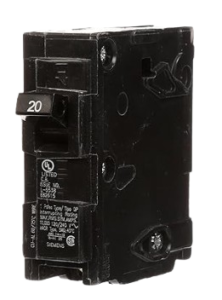
Check Current Price on Amazon – Circuit Breaker
How to Fix It
If it’s an overload:
- Unplug some devices
- Spread high-wattage appliances across different circuits
- Consider adding a new circuit (call an electrician)
If it’s a short circuit:
- Check all cords and plugs for damage
- Inspect outlets for loose connections or burn marks
- Replace faulty devices or outlets
If it’s a ground fault:
- Install GFCI outlets in wet areas (kitchen, bathroom, outdoor)
- Check for moisture or water near outlets
If the breaker is old:
- Replace the breaker (or call an electrician)
Warning Signs Not to Ignore
Call an electrician immediately if:
- The breaker trips immediately after resetting
- You see burn marks or smell burning plastic
- The breaker feels hot to the touch
- There are buzzing sounds from the panel
- You have fuse-style fuses instead of breakers (older home)
These could indicate a serious fire hazard.
For help with outlets, check out our guide on Outlet Not Working? Try This First.
When to Call an Electrician
Call a pro if:
- The problem persists after troubleshooting
- You need to add a new circuit
- The panel itself is damaged or outdated
- You have aluminum wiring (common in 1970s homes)
- You’re not comfortable working with electrical panels
Not sure what you can handle yourself? Our guide on When to Call a Plumber vs DIY explains the same principle for electrical work.
Conclusion
A tripping breaker is your friend — it’s doing its job protecting your home. But if it keeps tripping, something is wrong. Start by identifying the overload or faulty device, then address the root cause.
Don’t ignore the warning signs. Track down the problem before it becomes a fire hazard.
Buy a Circuit Breaker on Amazon
This article was last updated April 2026.
Tags: circuit breaker keeps tripping, electrical overload, short circuit, ground fault, electrical safety