
PLUMBING
Last updated: April 2026
Disclosure: Plumbing and Electrical Help is a participant in the Amazon Associates Program, an affiliate advertising program designed to provide a means for sites to earn advertising fees by linking to Amazon.
You step into the shower expecting a refreshing stream, and instead get a pathetic trickle. Low water pressure turns everyday tasks — washing dishes, showering, watering the garden — into frustrating chores.
The good news? Most causes of low water pressure are easy to diagnose and fix yourself.
Let’s get your water flowing strong again.
Common Causes of Low Water Pressure
Before you can fix it, you need to identify the cause:
- Clogged aerator — the small screen on your faucet accumulates mineral deposits over time.
- Partially closed valve — the main shutoff or fixture valve isn’t fully open.
- Pipe corrosion — older galvanized pipes corrode internally, restricting flow.
- Leaks — a hidden leak in your plumbing diverts water away.
- Sediment buildup — water heater sediment reduces hot water pressure.
- Pressure regulator failure — the main line pressure regulator goes bad.
- Municipal supply issues — sometimes the problem is outside your home.
Quick Fixes You Can Do Today
1. Clean the Aerator
The aerator is that small screen at the tip of your faucet. Unscrew it, soak it in vinegar for 30 minutes, then scrub with an old toothbrush.
Check Current Price on Amazon – Aerator Tool
2. Check All Valots
Make sure your main shutoff valve and fixture valves are fully open. Even a partially closed valve can drastically reduce flow.
3. Inspect for Leaks
Look under sinks, behind appliances, and at your water meter. If the meter runs when nothing is on, you have a leak.
4. Clean Showerheads
Remove the showerhead and soak it in vinegar overnight. For tough buildup, use a pin or paperclip to clear the holes.
Check Current Price on Amazon – Showerhead Cleaner
When the Problem Is the Water Heater
If low pressure only affects hot water, the problem is likely in your water heater:
- Sediment buildup — flush the water heater (see our guide on Water Heater Popping Sounds for instructions).
- Failed dip tube — an older water heater may have a broken dip tube that mixes cold and hot water.
- Corroded anode rod — inspect and replace if corroded.
Testing Your Water Pressure
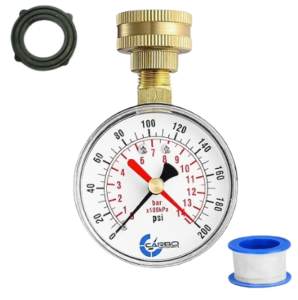
Want to know exactly how much pressure you have? Use a water pressure gauge:
Check Current Price on Amazon – Pressure Gauge
Normal pressure:
- 40-50 PSI = good
- 30-40 PSI = acceptable
- Below 30 PSI = low
- Above 80 PSI = too high (can damage pipes)
Attach the gauge to an outdoor faucet or hose bib for an accurate reading.
When to Call a Professional
Call a plumber if:
- Multiple faucets have low pressure throughout the house
- You suspect a major leak
- Pipes are corroded or damaged
- The pressure regulator needs replacing
- City water pressure is low (check with your utility)
Need help deciding? Our guide on When to Call a Plumber vs DIY has the details.
Conclusion
Low water pressure is usually a simple fix — start with the aerator and showerhead, check for leaks, and work up from there. Most problems don’t need a plumber.
Grab a wrench, some vinegar, and get your water flowing again.
Buy a Pressure Gauge on Amazon
This article was last updated April 2026.
Tags: low water pressure, fix low water pressure, water pressure, plumbing repair, water flow